
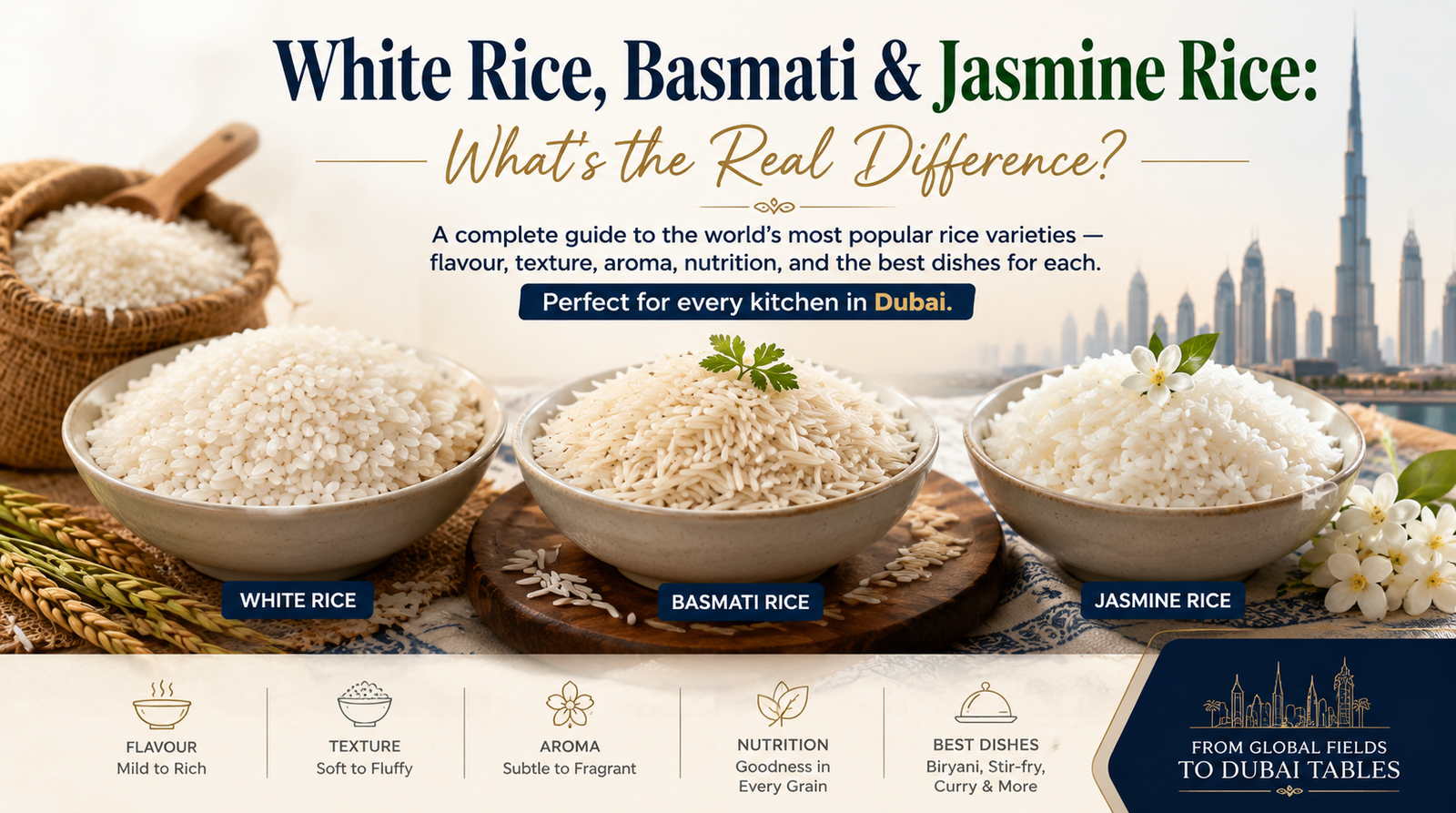
Rice feeds more than half the world's population — but not all rice is created equal. Walk into any grocery store or kitchen in Dubai and you'll find at least three common varieties: regular White Rice, aromatic Basmati, and fragrant Jasmine. Each one has its own unique character, ideal use case, and nutritional profile. Choosing the right rice can completely transform your dish. So which one should you reach for? Let's break it all down.
As a trusted foodstuff supplier in Dubai, Himmath Foodstuff sources the finest quality rice varieties for households, restaurants, and businesses across the UAE. This guide will help you understand exactly what you're buying — and why it matters.
🍚 What Is White Rice? Most Common
White Rice — The Universal Staple
White rice is the most widely consumed grain on earth. It is produced by milling paddy rice and removing the outer husk, bran layer, and germ — leaving behind the starchy white endosperm. This process gives white rice its clean, neutral flavour and smooth texture that pairs well with virtually any cuisine.
Origin & Processing
White rice has no single geographic origin — it is cultivated across Asia, Africa, and the Americas. The milling process strips away most of the fibre and nutrients, resulting in a soft grain that cooks quickly and has a longer shelf life.
Taste, Texture & Aroma
White rice has a mild, slightly sweet taste with a fluffy or slightly sticky texture depending on the variety (short-grain vs long-grain). It has almost no distinct aroma, making it the most versatile base for any dish.
Best Used For
Everyday meals, fried rice, sushi, congee/porridge, South Asian dals, stir-fries, and rice bowls. It is the go-to choice for quick, budget-friendly cooking.
🌾 What Is Basmati Rice? Dubai's Favourite
Basmati — The Queen of Fragrance
The name "Basmati" comes from the Sanskrit word meaning Queen of Fragrance — and it lives up to that title. Grown in the foothills of the Himalayas across India and Pakistan, Basmati is a long-grain, aged rice known for its exceptionally nutty aroma, fluffy texture, and elongated grains that double in length when cooked.
Origin & Characteristics
True Basmati rice is exclusively grown in the Punjab region of India and Pakistan and protected by geographic indication (GI) status. The distinctive aroma comes from a naturally occurring compound called 2-acetyl-1-pyrroline — the same compound found in pandan leaves and jasmine rice, but in much higher concentration in Basmati.
Taste, Texture & Aroma
Basmati has a rich, nutty, slightly floral aroma that fills the kitchen as it cooks. Once cooked, the grains remain long, dry, and separate — never clumping together. This makes it perfect for dishes where grain definition matters, like biryani and pilaf.
Why Dubai and the UAE Love Basmati
Dubai's diverse multicultural population — Indians, Pakistanis, Arabs, and Levantines — all share a deep love for Basmati rice. From Mandi and Machboos to Biryani and Kabsa, Basmati is the foundation of the region's most beloved rice dishes. It is by far the most popular variety in UAE homes and restaurants.
Best Used For
Biryani, pulao/pilaf, kabsa, mandi, machboos, rice with grilled meats, and any dish that demands fluffy, aromatic, grain-separated rice.
🌸 What Is Jasmine Rice? Southeast Asian Gem
Jasmine — Soft, Fragrant & Floral
Jasmine rice is a long-grain variety native to Thailand, where it is known as Khao Hom Mali — literally "fragrant rice." It shares the same aromatic compound as Basmati, but the experience is softer and more subtle. Jasmine rice has a delicate floral, almost popcorn-like scent that makes it a joy to cook with.
Origin & Characteristics
Thailand is the world's largest exporter of Jasmine rice. The grain is shorter and slightly rounder than Basmati, and it tends to be softer and moister when cooked. Unlike Basmati, Jasmine rice grains cling together slightly, which is ideal for dishes eaten with chopsticks or scooped with spoons.
Taste, Texture & Aroma
Jasmine rice has a mild, floral fragrance and a slightly sweet, buttery taste. When cooked, it is soft, moist, and lightly sticky — making it the perfect companion for rich, saucy dishes where you want the rice to absorb the flavours around it.
Best Used For
Thai green curry, pad thai, stir-fries, coconut rice, Southeast Asian grilled dishes, and any preparation with thick, flavourful sauces.
📊 Side-by-Side Comparison
Here is a complete comparison of all three varieties to help you make the right choice every time:
| Feature | 🍚 White Rice | 🌾 Basmati Rice | 🌸 Jasmine Rice |
|---|---|---|---|
| Origin | Global | India / Pakistan | Thailand |
| Grain Length | Short / Medium | Extra Long | Medium-Long |
| Aroma | Neutral | ★★★ Nutty & Strong | ★★ Mild & Floral |
| Texture When Cooked | Soft, slightly sticky | Fluffy, dry, separate | Soft, moist, slightly sticky |
| Best Cuisine | All-purpose | Middle Eastern, South Asian | Southeast Asian |
| Top Dishes | Fried rice, sushi, dal | Biryani, kabsa, pulao | Thai curry, stir-fry |
| Glycemic Index (GI) | ~72 (High) | ~56 (Medium) ✓ Best | ~68 (Medium-High) |
| Cooking Time | 15–18 min | 20–25 min | 15–18 min |
| Price Range | Most Affordable | Mid to Premium | Mid Range |
| Availability in Dubai | ✓ Widely Available | ✓ Very Popular | ✓ Available |
💚 Which Rice Is Healthiest?
All three varieties are carbohydrate-rich sources of energy, but they differ in their nutritional impact — especially their Glycemic Index (GI), which measures how quickly a food raises blood sugar levels.
(High GI)
(Best / Lowest GI)
(Medium-High GI)
Basmati wins on health — its lower GI means it causes a slower, steadier rise in blood sugar, making it the better choice for diabetics, those managing weight, or anyone focused on long-term metabolic health. For an even healthier option, look for Brown Basmati Rice, which retains its bran layer and offers additional fibre and nutrients.
🛒 Which Rice Should You Buy in Dubai?
Dubai is one of the world's most multicultural cities, with a food culture that draws from Indian, Pakistani, Arab, Filipino, Southeast Asian, and Western traditions. Here's what each community typically reaches for:
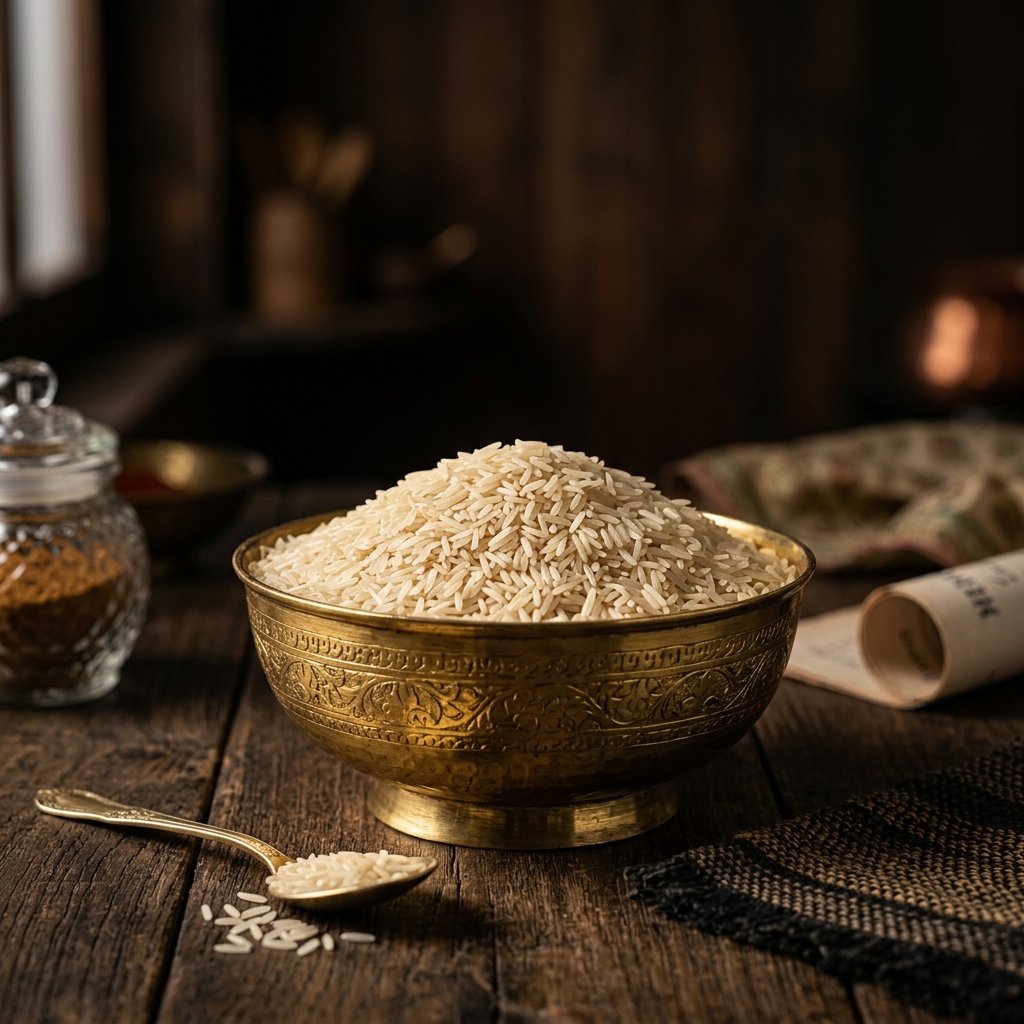
Indian & Pakistani families almost always keep aged Basmati at home — it's non-negotiable for biryani, pulao, and everyday dal-rice combinations. Arab households also prefer Basmati for kabsa, mandi, and machboos. Filipino and Southeast Asian families prefer Jasmine rice for its soft, sticky texture that pairs beautifully with adobo, kare-kare, and curries. White rice is the everyday, budget-friendly staple used across all communities for quick meals and fried rice.
Whether you need a single bag for your home or a bulk wholesale order for your restaurant or cafeteria, Himmath Foodstuff supplies premium-quality rice varieties across Dubai and the UAE at competitive prices.
❓ Frequently Asked Questions
Click any question to expand the answer.
✅ Final Thoughts
All three rice varieties — White, Basmati, and Jasmine — are delicious, nutritious, and valuable in the right context. White rice is the affordable everyday workhorse. Basmati is the aromatic showstopper built for biryani, pulao, and the rich rice traditions of South Asia and the Middle East. Jasmine rice is the fragrant, soft companion to Southeast Asian curries and stir-fries.
The right rice doesn't just fill a plate — it completes a dish. Knowing the difference means every meal you cook can reach its full potential.