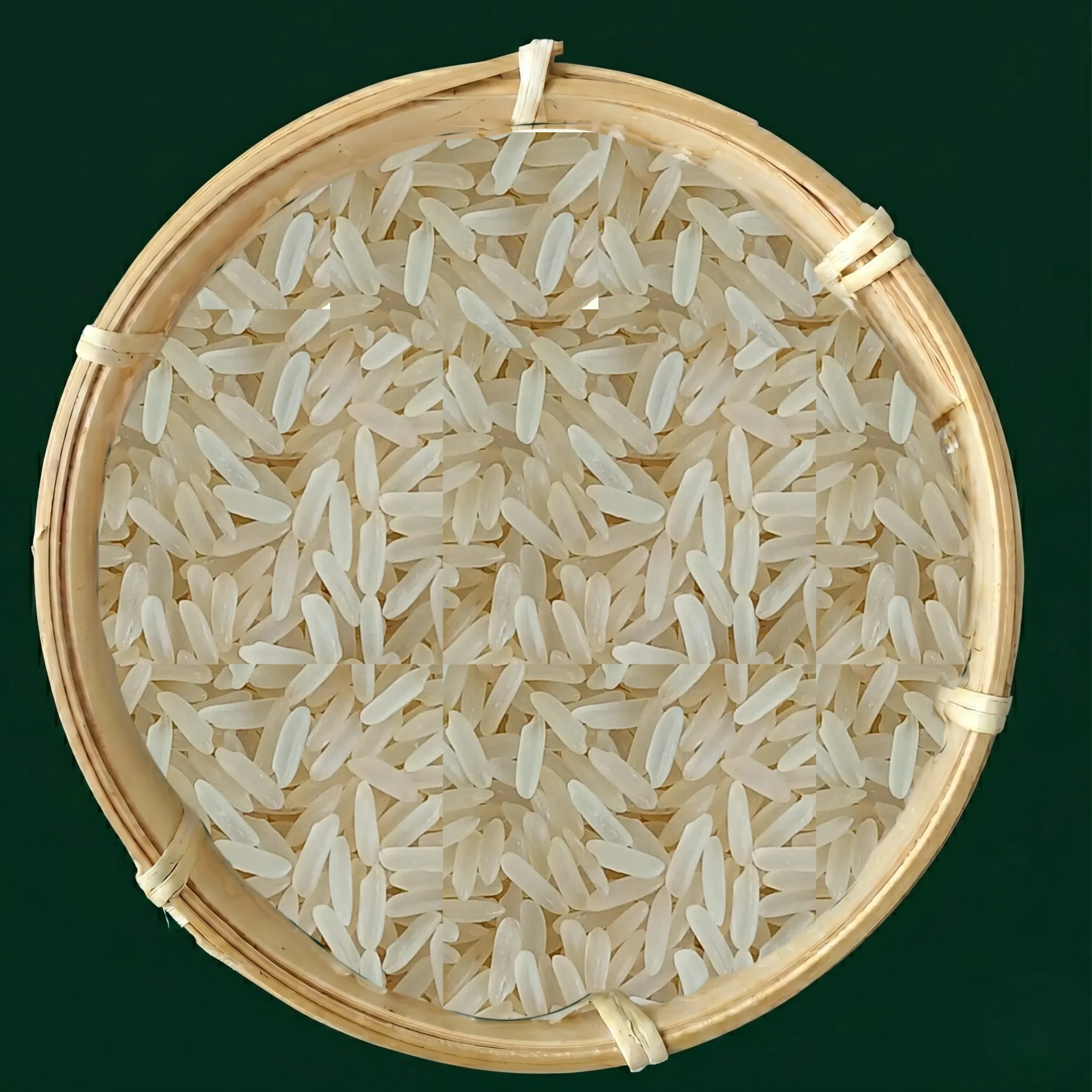
LONG GRAIN PARBOILED RICE (5%,25% BROKEN)
Long Grain Parboiled Rice from Himmathfoodstuff is a premium non-basmati parboiled rice available in 5% and 25% broken grades — offering nutritionally superior, firm-textured, and commercially versatile supply solutions for food distributors, institutional caterers, government procurement agencies, and food manufacturers worldwide. As a dependable rice exporter supplying buyers across the Middle East, Africa, Europe, and Asia, we offer both grades in bulk on FOB, CIF, and CFR terms. Available in 25 kg and 50 kg PP bags with complete export documentation.
SAY HELLO TO HIMMATH
Let's work together
Long Grain Parboiled Rice – Nutritionally Superior Non-Basmati Rice for High-Volume Global Supply
Among the non-basmati rice varieties that command consistent and growing demand across global bulk rice markets, Long Grain Parboiled Rice occupies a position of particular commercial significance. Combining the practical cooking advantages of parboiling technology with the broad market appeal of the long grain rice profile, this variety has established itself as a preferred supply commodity for government food security programmes, humanitarian food aid operations, large-scale institutional catering, and food manufacturing businesses across the Middle East, Africa, Europe, and Asia.
At Himmathfoodstuff, we source and supply premium Long Grain Parboiled Rice in two commercially essential broken grain grades — 5% broken and 25% broken — providing international buyers with a nutritionally enhanced, operationally reliable, and competitively priced non-basmati rice supply solution tailored precisely to their end-use requirements. As an experienced rice exporter with established sourcing relationships across India’s leading parboiled rice producing regions, we deliver consistent grade, dependable volume, and full export documentation to buyers worldwide.
Understanding Long Grain Parboiled Rice
Parboiled rice — sometimes referred to as converted rice in certain international markets — is produced through a controlled hydrothermal process applied to the paddy before milling. The process involves three sequential stages — soaking the raw paddy in water, steaming it under controlled pressure, and drying it thoroughly before conventional milling removes the outer husk and bran layers. This hydrothermal treatment fundamentally transforms the physical and nutritional properties of the grain in ways that deliver measurable advantages across every stage of the supply chain — from the mill through to the end consumer’s kitchen.
During the steaming stage, the starch granules within each grain partially gelatinise and the soluble nutrients present in the bran layer — primarily B vitamins, minerals, and dietary fibre — migrate inward into the grain’s endosperm. When the grain is subsequently milled to remove the bran, these nutrients are retained within the grain rather than being discarded with the bran layer as occurs in conventional white rice milling. The result is a parboiled rice that is measurably more nutritious than standard white milled rice of the same variety — a quality that directly supports the nutritional objectives of government food programmes, food aid operations, and health-conscious institutional buyers worldwide.
The parboiling process also significantly improves the grain’s physical characteristics — producing a harder, more resilient kernel that generates substantially less breakage during milling, packing, and transport compared to raw milled long grain rice. This structural improvement delivers direct commercial benefits to importers and distributors in the form of higher whole-grain percentages, better product consistency, and reduced quality complaints across the supply chain.
Long Grain Parboiled Rice combines these parboiling advantages with the familiar long grain profile — individual grains of 6.0 mm or above in raw length — that delivers the clean, separate, fluffy cooked texture preferred across the diverse food cultures of the Middle East, Africa, South Asia, and Southeast Asia. This combination of nutritional quality, structural resilience, cooking performance, and broad cultural acceptability makes Long Grain Parboiled Rice one of the most commercially valuable non-basmati rice commodities in the global export market.
Grade 1 — Long Grain Parboiled Rice 5% Broken
Long Grain Parboiled Rice at 5% broken grade represents the premium whole-grain expression of this parboiled non-basmati commodity — a product where a minimum of 95% of the grains in every consignment are whole, unbroken kernels of consistent long length, uniform colour, and clean well-sorted appearance. Produced through meticulous milling, comprehensive sortex processing, and precise grading that eliminates broken, off-colour, and off-specification kernels before packing, this grade delivers a visually consistent and commercially premium parboiled rice product suited to the most demanding supply requirements.
The characteristic amber-yellow colour of parboiled rice is present across the raw grain in the 5% broken grade — a natural result of the steaming process that signals the nutritional enhancement and structural integrity that distinguish parboiled rice from conventionally milled white rice. Upon cooking, the grains transition to a clean white or very light cream colour, elongating noticeably and remaining fully separated on the plate — producing the firm, fluffy, non-sticky cooked texture that has made parboiled long grain rice the preferred grain for institutional food service operations across the African continent, the Middle East, and South Asia.
The 5% broken grade is the most suitable for government public distribution programmes, premium institutional catering, food service operations, and retail packaging formats where grain appearance, nutritional quality, and cooking uniformity are important purchasing criteria. For importers and distributors targeting food service operators, supermarket chains, and public sector procurement agencies, the 5% broken grade provides the optimum balance of superior parboiled grain quality and competitive non-basmati pricing — making it one of the most commercially effective rice products available in the global bulk non-basmati market.
In West African markets — where parboiled rice is the culturally dominant and most widely consumed rice type — Long Grain Parboiled Rice at 5% broken is the standard specification for retail and institutional supply, with demand driven by deeply established consumer preference for the firm texture, separate grain, and characteristic colour of parboiled rice in dishes such as jollof rice, fried rice, and steamed rice served with stews and soups. Himmathfoodstuff’s 5% broken grade meets this specification consistently and reliably across every consignment, making it a dependable supply solution for importers serving these high-volume West African markets.
Grade 2 — Long Grain Parboiled Rice 25% Broken
Long Grain Parboiled Rice at 25% broken grade is a mid-range commercial product where a defined proportion of broken parboiled grain pieces is present alongside whole kernels — a composition that delivers the full nutritional and structural advantages of parboiling at a price point significantly below that of the 5% broken premium grade. This grade is specifically designed for applications where cost efficiency is the primary purchasing driver and whole-grain visual presentation is a secondary consideration — making it the preferred specification for large-scale humanitarian food aid programmes, government food security initiatives, mass institutional catering operations, and food manufacturing businesses that further process the rice during production.
The broken grain pieces present in the 25% grade retain the same parboiling-derived nutritional benefits as whole grain parboiled rice — including enhanced B vitamin content, improved mineral retention, and higher dietary fibre levels compared to conventionally milled white rice. This means that buyers sourcing parboiled rice specifically for its nutritional advantages in food aid or institutional nutrition programmes do not sacrifice the core nutritional benefit of parboiling by selecting the 25% broken grade over the premium 5% grade — they simply access the same nutritional quality at a more cost-effective price per tonne.
The 25% broken grade also cooks faster than whole-grain parboiled rice due to the increased surface area and water absorption rate of broken grain pieces — a practical operational advantage for large-scale institutional kitchens and food manufacturers managing high-volume rice preparation under time and energy constraints. Food manufacturers use the 25% broken parboiled grade in the production of canned rice products, rice-based convenience meals, institutional catering packs, and processed food items where the rice is further transformed during manufacturing and grain appearance is therefore not a specification requirement.
Nutritional Advantages Across Both Grades
One of the defining commercial strengths of Long Grain Parboiled Rice — across both the 5% and 25% broken grades — is its measurably superior nutritional profile compared to conventionally milled white long grain rice of the same variety. The parboiling process retains meaningful quantities of thiamine (vitamin B1), niacin (vitamin B3), riboflavin (vitamin B2), iron, and zinc within the grain — nutrients that are critically important in food security and humanitarian supply contexts where rice is often the primary or sole dietary staple for large vulnerable population groups.
For government food procurement agencies, international food aid organisations, and institutional nutrition programme operators, this nutritional advantage makes Long Grain Parboiled Rice the recommended specification over conventional white rice — supporting better dietary outcomes for beneficiary populations without any increase in logistical complexity or supply chain requirements. Himmathfoodstuff’s Long Grain Parboiled Rice meets internationally recognised food aid quality specifications and is supplied with full nutritional documentation as part of the standard export documentation package.
Why Source Long Grain Parboiled Rice from Himmathfoodstuff
Himmathfoodstuff sources Long Grain Parboiled Rice exclusively from APEDA-certified processing facilities operating modern parboiling units, milling equipment, sortex machines, and colour sorters under strict food safety and quality management protocols. Our direct sourcing relationships with certified mill partners across India’s key parboiled rice producing regions — including Andhra Pradesh, Telangana, Punjab, and Haryana — give us reliable access to consistent volumes of properly graded parboiled rice throughout the crop year, ensuring uninterrupted supply continuity for our buyers across both broken grade specifications.
Pre-shipment quality verification covers grain length uniformity, broken grain percentage accuracy, parboiling colour uniformity, moisture content, whiteness post-cooking, foreign matter inspection, and overall lot cleanliness — with all findings compiled into a detailed Certificate of Analysis provided to the buyer before shipment confirmation. Complete export documentation accompanies every consignment — including Phytosanitary Certificate, Certificate of Origin, SGS Inspection Report, and Bill of Lading — ensuring smooth and efficient customs clearance at all major destination ports worldwide.
We supply government procurement agencies, international food aid organisations, importers, wholesale distributors, supermarket chains, institutional catering operators, and food manufacturers across the Middle East, Africa, Europe, and Southeast Asia — offering flexible packaging configurations, private label branding options, and shipping terms precisely structured around each buyer’s volume, nutritional specification, end-use application, and commercial requirements.
Packaging, Storage & Shipping
Long Grain Parboiled Rice is available in both broken grades in 25 kg and 50 kg polypropylene woven bags with inner polyethylene liners providing reliable moisture protection throughout transit and storage. Jute bag options, custom packaging formats, and private label branding are available upon request. The product must be stored in a clean, cool, dry, and well-ventilated facility away from direct sunlight, excess humidity, and pest exposure. Under correct storage conditions, shelf life is a minimum of 18 to 24 months from the milling date — an extended shelf life that reflects the structural and biological stability conferred by the parboiling process. International shipments are available on FOB, CIF, and CFR terms to all major global ports.
Related products
Factory to Location
SGS & Lab Verified
Fast World-wide Delivery